Address
304 North Cardinal
St. Dorchester Center, MA 02124
Work Hours
Monday to Friday: 7AM - 7PM
Weekend: 10AM - 5PM
Address
304 North Cardinal
St. Dorchester Center, MA 02124
Work Hours
Monday to Friday: 7AM - 7PM
Weekend: 10AM - 5PM
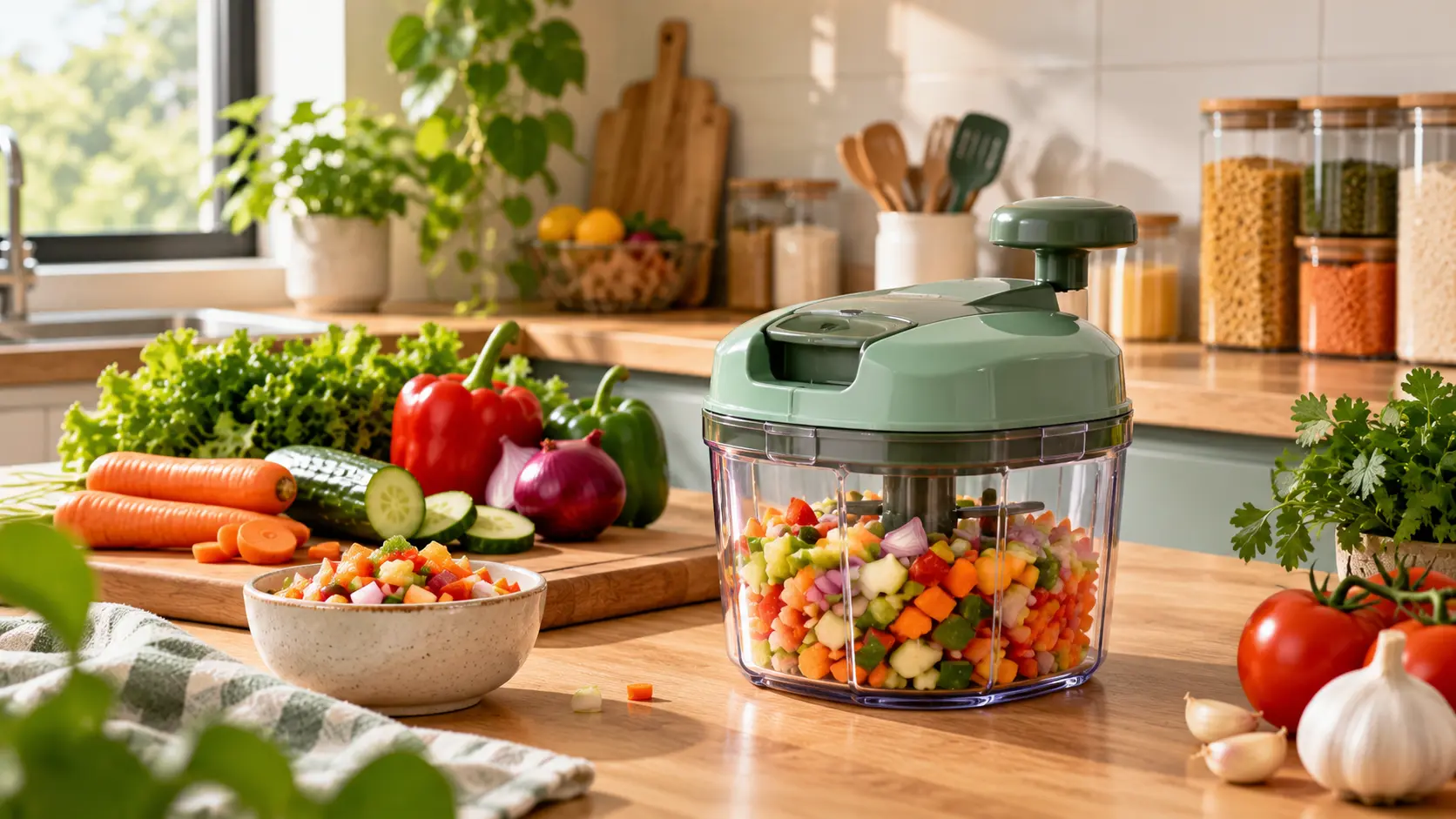
Preparing vegetables is part of almost every home-cooked meal. But chopping onions, carrots, cucumbers, tomatoes, garlic, and other ingredients by hand can take valuable time.
A good vegetable chopper can make everyday food preparation faster, easier, and more consistent.
But with so many options available, how do you choose a vegetable chopper that actually fits your kitchen and cooking habits?
The right choice depends on several factors, including capacity, blade quality, material, chopping mechanism, cleaning, safety, and price.
In this guide, we’ll explain what to look for when buying a vegetable chopper so you can choose a practical option for your everyday cooking.
A vegetable chopper is a kitchen tool designed to cut vegetables and other suitable ingredients into smaller pieces with less manual effort.
Depending on the design, a chopper can be used for:
Some models are completely manual, while others use electricity. Choosing between them depends largely on how much you cook and how much preparation you usually do.
If you’re looking for the best vegetable chopper for your kitchen, don’t choose based on appearance alone. Consider these important features first.
Capacity is one of the first things you should consider.
A small vegetable chopper can be convenient for preparing ingredients for one or two people. A larger container may be more practical for families or anyone who regularly prepares several ingredients at once.
Think about how much you normally chop during a meal.
Small choppers are useful for:
Larger choppers are better for:
A larger capacity isn’t necessarily better. The goal is to choose a size that matches your everyday needs.
The blade is one of the most important components of a vegetable chopper.
Look for a model with durable stainless-steel blades. Good-quality blades can provide cleaner and more consistent chopping while reducing the amount of effort required.
Before buying, consider:
A multi-blade design can help distribute cutting across the container, but more blades don’t automatically mean better performance. Overall construction matters more.
Vegetable choppers generally fall into two main categories: manual and electric.
Manual choppers usually operate through a pull-string, press mechanism, or similar system.
They are popular because they don’t require electricity and are generally compact and easy to store.
Advantages include:
For basic kitchen tasks, a manual vegetable chopper can be a highly practical option.
Electric choppers use a motor to rotate the blades.
They can be useful when you regularly prepare larger quantities or want to reduce manual effort.
Advantages include:
However, electric models usually require more storage space and involve additional electrical components.
| Feature | Manual Chopper | Electric Chopper |
|---|---|---|
| Electricity | Not required | Required |
| Portability | Excellent | Limited |
| Storage | Usually compact | Requires more space |
| Small quantities | Excellent | Good |
| Large quantities | Good | Excellent |
| Manual effort | Moderate | Low |
| Noise | Usually low | Usually higher |
| Everyday preparation | Excellent | Excellent |
For simple everyday cooking, a manual model may provide everything you need. If speed and minimal effort are your priorities, an electric chopper may be worth considering.
The container is another important part of a vegetable chopper.
A transparent container is particularly useful because it allows you to see the ingredients while chopping. This makes it easier to judge whether the vegetables have reached your preferred size.
Look for a container that is:
A sturdy container can also improve the overall stability of the chopper during use.
A vegetable chopper is only useful if you actually enjoy using it.
If food becomes trapped around the blades or inside difficult-to-reach areas, cleaning can quickly become frustrating.
Before buying, check whether:
A simple, easy-to-clean design is especially important if you plan to use the chopper every day.
Vegetable choppers contain sharp blades, so safe handling is essential.
Look for a design with a secure lid and stable construction. The container should remain reasonably steady during operation, while the blades should stay securely in their intended position.
When cleaning or removing the blade, handle it carefully and keep sharp components away from children.
Remember: convenience is important, but safe operation should always come first.
Price is important, but the cheapest vegetable chopper isn’t necessarily the best choice.
Instead of simply asking:
“Which chopper costs less?”
Consider:
“Which chopper gives me the best value for the way I cook?”
Compare:
A slightly better-built product that you use regularly may provide much more value over time than a cheaper product that needs to be replaced quickly.
The right capacity depends on your household and cooking routine.
A compact chopper is usually sufficient if you mainly prepare small amounts of:
A medium or larger container can save time when preparing vegetables for several people.
You can chop more ingredients in fewer batches, which can make meal preparation more efficient.
If you cook frequently or prepare several meals in advance, prioritize capacity, durability, and easy cleaning rather than choosing purely based on size.
If your goal is an everyday kitchen tool rather than a specialized appliance, keep the selection simple.
A practical vegetable chopper should have:
You don’t necessarily need the model with the most features.
In fact, simplicity can be an advantage when you’re using a kitchen tool regularly.
A low price can be attractive, but poor materials or weak construction may reduce the product’s lifespan.
More capacity isn’t always better. A large chopper can take up unnecessary storage space if you normally prepare small quantities.
A complicated design can become inconvenient after repeated use.
A stylish product is nice to have, but functionality should come first.
Extra attachments and functions can be useful, but only if you’ll actually use them.
Before making your purchase, ask yourself:
If the answer to most of these questions is yes, you’ve probably found a suitable option.
There isn’t one vegetable chopper that’s perfect for everyone.
For quick everyday cooking:
A compact manual chopper can be an excellent choice.
For family-sized preparation:
Choose a model with a larger container and durable construction.
For minimum manual effort:
An electric chopper may be more suitable.
For small kitchens:
Prioritize a compact design that’s easy to store.
The key is to match the product to your actual cooking habits, rather than buying based solely on popularity or appearance.
Choosing the right vegetable chopper doesn’t have to be complicated.
Focus on the things that matter most: blade quality, capacity, material, ease of use, cleaning, safety, and overall value.
For most everyday kitchens, a reliable and easy-to-use vegetable chopper can save preparation time and make cooking more convenient.
Whether you choose a manual or electric model, the best option is ultimately the one that fits your cooking routine and makes your everyday kitchen tasks easier.
Looking for practical kitchen essentials?
Explore NityoCart’s kitchen collection and discover useful products selected to make everyday cooking and home life more convenient.