Address
304 North Cardinal
St. Dorchester Center, MA 02124
Work Hours
Monday to Friday: 7AM - 7PM
Weekend: 10AM - 5PM
Address
304 North Cardinal
St. Dorchester Center, MA 02124
Work Hours
Monday to Friday: 7AM - 7PM
Weekend: 10AM - 5PM
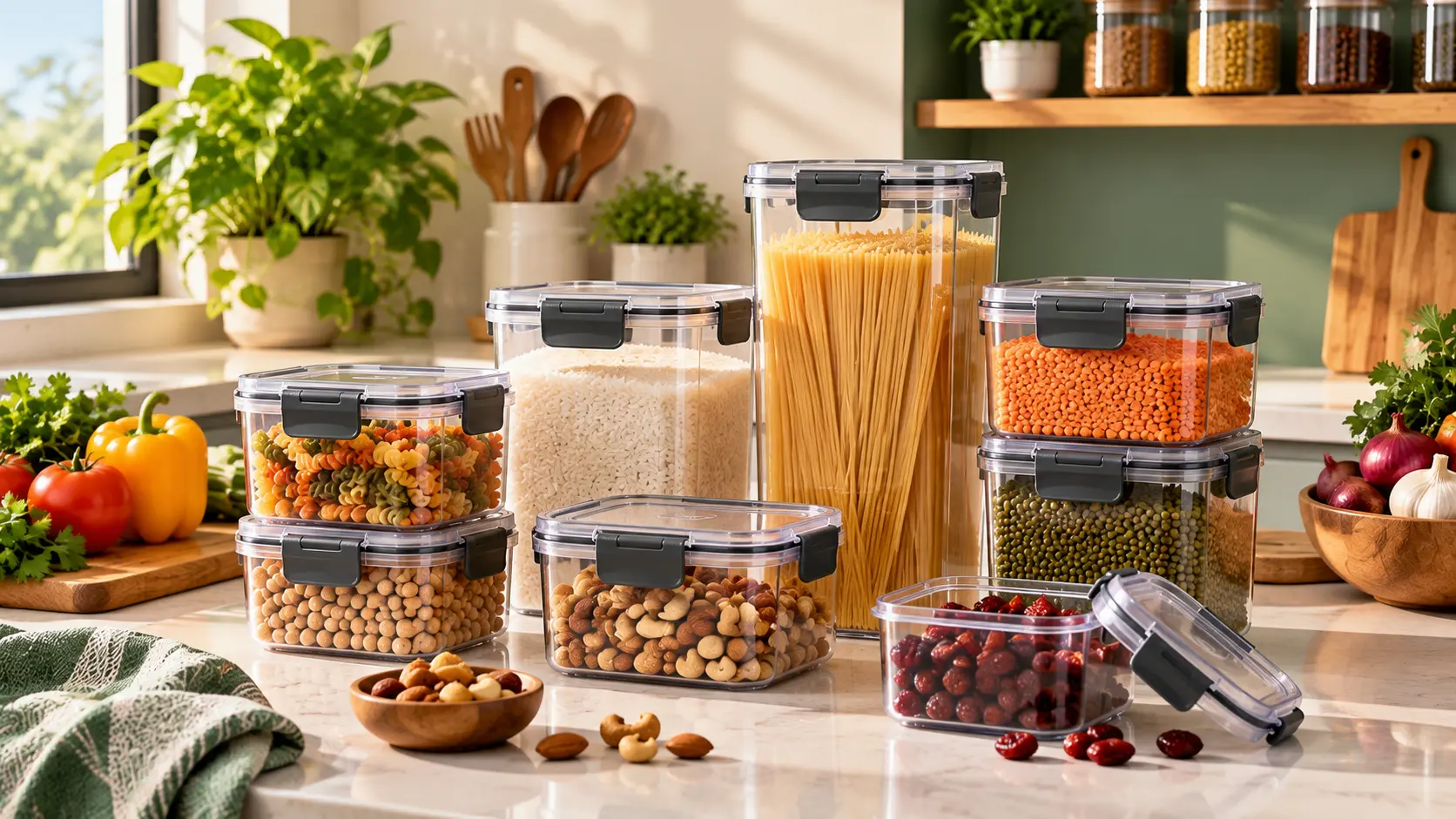
Choosing the right food storage containers can make your kitchen more organized and everyday food storage much easier. But with so many sizes, materials, shapes, and lid designs available, it can be difficult to know which containers are actually worth buying.
A good food storage container should be practical, easy to clean, convenient to store, and suitable for the type of food you usually keep at home.
Before buying your next set of food storage containers, here are 5 important things to check.
The first thing to consider is what the container is made from.
Food storage containers are commonly available in materials such as plastic, glass, and stainless steel. Each option has different advantages depending on how you plan to use it.
Plastic containers are usually lightweight and convenient for everyday kitchen use. They can be useful for storing dry foods, snacks, leftovers, and other household items.
If you’re buying plastic containers, check that they are made from food-grade materials and are designed for their intended use.
Glass containers are heavier but can be useful for storing leftovers and prepared meals. They are also easy to clean and can help you see the contents clearly.
However, glass can break if dropped, so it may not be the best choice for every situation.
Stainless steel containers are durable and can be useful for certain types of food storage. However, because they are not transparent, you cannot see the contents without opening the container.
The best material depends on how you plan to use the container.
The container itself is important, but the lid can be just as important.
A properly fitting lid helps protect stored food from air, moisture, dust, and kitchen odors.
When choosing airtight food containers, check:
For dry ingredients such as rice, flour, sugar, lentils, cereal, and spices, a good airtight seal can be particularly useful.
Don’t choose a container based only on its appearance. Check the lid and sealing mechanism carefully.
Buying containers that are too large or too small can make your kitchen storage less convenient.
Think about what you normally store before choosing the size.
For example:
Shape also matters.
Square and rectangular containers can often be easier to organize because they can be placed next to each other with less wasted space.
If your kitchen has limited storage space, choosing containers with stackable designs can make a noticeable difference.
Instead of buying a large set immediately, think about the foods you store most frequently and choose sizes that match those needs.
Food storage containers are used regularly, so cleaning should be simple.
Before buying, look at the container’s shape and design.
Containers with narrow openings or complicated corners can sometimes be harder to clean properly.
Consider:
The lid deserves special attention because food particles can sometimes collect around the sealing area.
A container that is easy to clean is more practical for everyday kitchen use.
Price is important, but the cheapest container is not always the best choice.
Instead of looking only at the price, consider the overall value.
Ask yourself:
A slightly more expensive container may be a better choice if it offers better durability and usability.
At the same time, you don’t necessarily need premium containers for every purpose. Choose based on your actual storage needs and budget.
Before buying food storage containers, consider where and how you will use them.
For example, if you mainly want to organize your pantry, focus on airtight containers with stackable designs.
If you regularly store leftovers, you may prefer containers that are easy to clean and convenient to handle.
If you prepare meals in advance, having several matching containers in different sizes can make food organization easier.
The right choice depends less on having the “perfect” container and more on finding containers that fit your kitchen and your daily routine.
Many people focus on the appearance or number of containers in a set and overlook practical details.
Here are some common mistakes to avoid:
A cheap container may not provide the durability or sealing quality you need.
A container with a good body but a poor-fitting lid may not be useful for long-term storage.
A large set may look attractive, but if most containers are the same size, you may not get much practical value from it.
Always consider your cabinets, shelves, refrigerator, or pantry before choosing container sizes.
Complicated shapes and difficult-to-remove seals can make regular cleaning frustrating.
Before purchasing, quickly check these five things:
☐ Material — Is it suitable for your intended use?
☐ Lid & Seal — Does the lid close securely?
☐ Size & Shape — Does it fit your food and available storage space?
☐ Cleaning — Is it easy to clean?
☐ Durability & Value — Is the quality worth the price?
If a container passes these five checks, it is much more likely to be a practical addition to your kitchen.
There isn’t one type of food storage container that is perfect for every kitchen.
The right choice depends on what you store, how frequently you use the containers, how much storage space you have, and your budget.
For everyday pantry organization, airtight and stackable containers can be particularly useful.
For leftovers and prepared meals, containers that are easy to clean and convenient to handle may be more important.
The goal is simple: choose containers that make your kitchen more organized, convenient, and easier to manage.
Buying food storage containers may seem simple, but paying attention to a few details can make a big difference.
Before making a purchase, remember to check the material, lid and seal, size and shape, cleaning convenience, and overall durability and value.
Instead of buying containers simply because they look good or come in a large set, choose products that actually fit your everyday needs.
A well-organized kitchen starts with small, practical choices—and the right food storage containers can be one of them.
Looking for practical kitchen and home products? Explore NityoCart’s collection of everyday essentials and find products that can make your daily routine easier.